

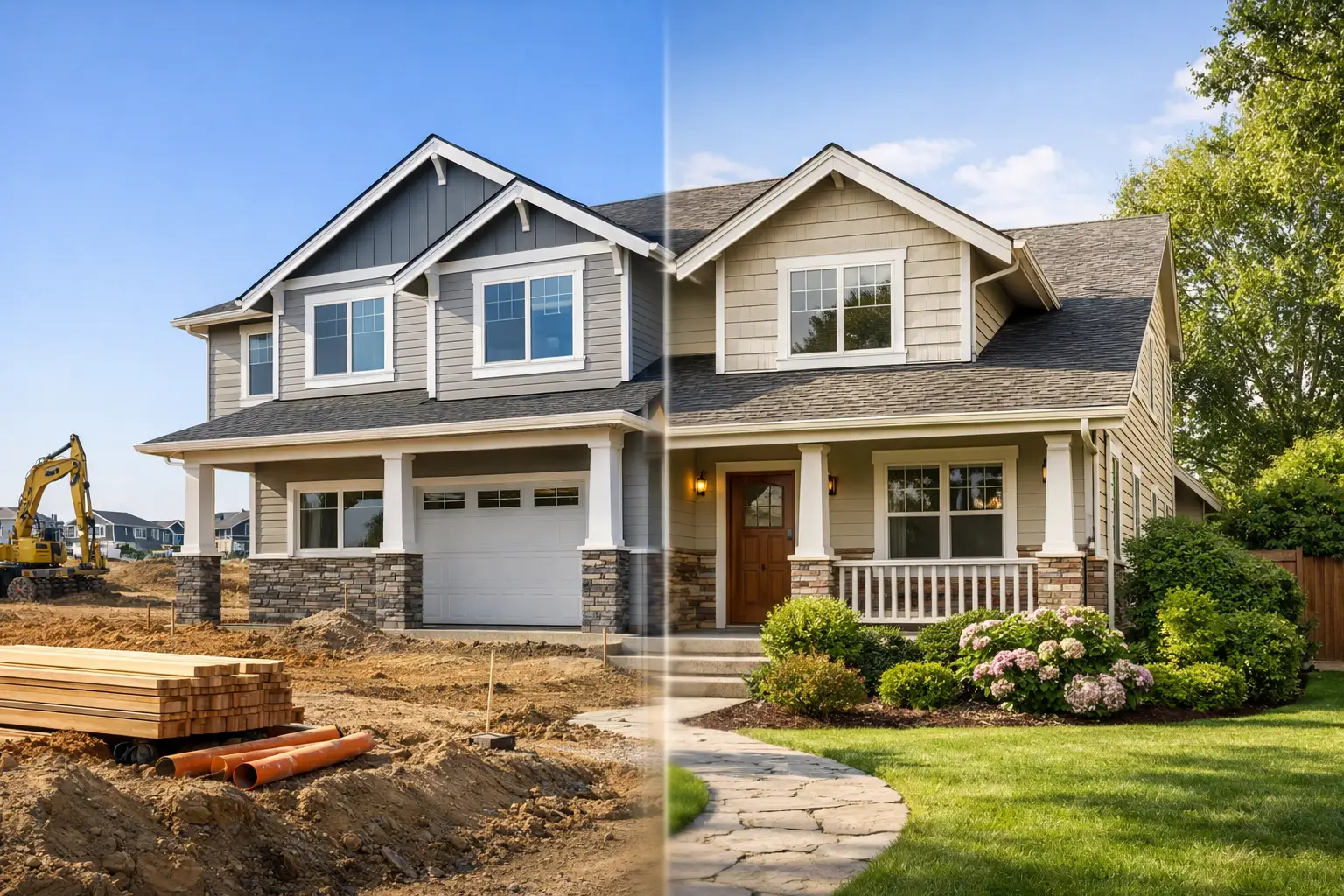
A brand-new kitchen, untouched flooring, and the chance to choose finishes can be exciting. So can a resale home with mature trees, an established neighborhood, and the character that only comes with time. When weighing new construction versus resale homes, the better choice is rarely about which property is objectively better. It is about which one fits your budget, timeline, lifestyle, and tolerance for decisions and surprises.
For buyers across Maryland’s Eastern Shore, Anne Arundel County, Queen Anne’s County, and nearby communities, both paths can lead to a wonderful home. The key is looking beyond the model-home appeal or the charm of an older property and understanding what comes with each.
New Construction Versus Resale Homes: The Real Differences
New construction offers a clean slate. Depending on where a home is in the build process, you may be able to select cabinets, countertops, flooring, lighting, and other design details. Newer building standards can also mean modern layouts, current energy features, and less immediate maintenance than an older property.
A resale home offers something equally valuable: what you see is usually what you get. You can walk through the finished space, assess natural light at different times of day, see how the neighborhood feels, and understand the property’s actual lot, landscaping, and surroundings. In many established areas, resale homes may also provide more location options close to workplaces, waterfront amenities, schools, or town centers.
Neither option is automatically easier. New homes can involve builder contracts, extended timelines, and upgrades that add up quickly. Resale homes can require repairs, updating, or more competitive offer strategies. The right decision comes from matching the property type to your priorities rather than chasing a single idea of a perfect home.
What a New Construction Home Can Offer
For buyers who want a home that feels personalized from day one, new construction can be a strong choice. A builder may offer several floor plans and finish packages, allowing you to choose a layout that works for a growing family, a home office, multigenerational living, or a simpler downsizing plan.
Newer homes often include features buyers now expect, such as open living spaces, larger closets, attached garages, smart-home options, and energy-efficient windows and systems. While no home is maintenance-free, a new roof, HVAC system, appliances, and plumbing fixtures can reduce the likelihood of major near-term replacements.
Builder incentives can also be attractive. In some situations, a builder may offer assistance toward closing costs, rate buydowns, or upgrades when a buyer uses a preferred lender or settlement provider. Those incentives deserve a close look, not an automatic yes. A favorable credit can be helpful, but it should be weighed against the loan terms, interest rate, and total cost of financing.
The Costs That Do Not Always Show Up in the Base Price
The price displayed for a new home is often a starting point. A premium lot, additional windows, upgraded flooring, cabinetry, tile, appliances, and structural choices can change the final number substantially. Even items that feel essential, such as ceiling fan wiring, a deck, or a finished recreation room, may be upgrades rather than standard features.
Buyers should also account for items completed after closing. Window treatments, landscaping, fencing, patio work, storage systems, and additional lighting can be meaningful expenses. In a newer community, construction may continue around you for months or even years, which can affect noise, traffic, and the finished feel of the neighborhood.
Timelines Require Flexibility
A quick-move-in home can close relatively soon, but a home built from the ground up may take many months. Weather, permitting, material availability, inspections, and construction scheduling can affect the target completion date. If you are relocating, ending a lease, selling another home, or coordinating a school-year move, timing should be part of the decision from the beginning.
A builder’s contract also differs from a typical resale contract. It is generally written to protect the builder, and deadlines, deposits, warranty language, and change-order policies deserve careful attention. Having knowledgeable representation means you have someone focused on your interests, communication, and key decision points throughout the build.
Why Resale Homes Still Compete So Well
Resale homes offer immediate context. You can see the street, the established landscaping, the actual view from the backyard, and the flow of the home as it exists today. That certainty matters, especially for buyers who need to move on a firmer schedule.
In many Maryland communities, resale inventory also opens the door to locations where new building opportunities are limited. An established neighborhood in Severna Park, Bowie, Easton, Glen Burnie, Odenton, or Queen Anne’s County may offer proximity and neighborhood character that cannot be replicated in a new development farther out.
A resale home may have more square footage, a larger lot, or practical features already in place at a price that compares favorably with new construction. Finished basements, decks, mature landscaping, sheds, fencing, and upgraded kitchens can add real value. Of course, buyers should distinguish between features that are attractive and systems that are nearing the end of their useful life.
Condition Is a Question, Not a Deal Breaker
Older does not mean poorly maintained, and new does not mean problem-free. A well-cared-for resale home can be an excellent purchase, particularly when inspections show that major systems have been maintained and the seller has addressed needed repairs.
The home inspection is where facts replace assumptions. Depending on the property, buyers may also consider inspections for radon, septic systems, wells, chimneys, pools, or other features. The findings can help shape a repair request, a credit discussion, or a confident decision to move forward as-is.
Not every inspection issue needs to become a negotiation battle. Cosmetic updates may be manageable, while safety concerns, water intrusion, aging electrical components, or a failing system deserve more attention. The goal is not to find a flawless house. It is to understand the home’s condition, anticipated costs, and whether the purchase still makes sense for you.
Inspections and Warranties Matter in Both Choices
One of the most costly assumptions a buyer can make is that a new home does not need an independent inspection. Municipal inspections and builder quality checks serve important purposes, but an independent inspector works for the buyer. A professional inspection at key stages of construction, or before final walkthrough, can identify incomplete items or concerns that should be addressed before settlement.
New construction usually includes a builder warranty, but buyers should understand what it covers, for how long, and how warranty claims are handled. Keep records of walkthrough items, repair requests, and correspondence. A final walkthrough is your opportunity to verify that agreed-upon work is completed and that the home is in the expected condition.
With a resale home, warranty coverage may be limited or unavailable, but you have the advantage of reviewing the home’s real-world performance. Seller disclosures, maintenance records, permits, and inspection results can provide a useful picture of ownership history. In either case, careful due diligence protects your investment.
Think Beyond the House Itself
A home purchase is also a location and lifestyle decision. Compare commute patterns, school preferences, access to medical care, nearby shopping, HOA rules and fees, property taxes, and flood considerations where relevant. For buyers considering the Eastern Shore, waterfront proximity and environmental factors may matter as much as the home’s finishes.
A newer community may offer sidewalks, amenities, and a consistent neighborhood look. A resale neighborhood may offer larger trees, greater architectural variety, and a more established sense of place. Visit at different times if possible. Morning traffic, evening activity, and weekend noise can tell you more than a single showing.
For investors, the comparison should include rental demand, rental restrictions, ongoing maintenance, and the likelihood of future capital improvements. A newer property may appeal to tenants seeking lower-maintenance living, while a well-located resale home may benefit from established demand and a more accessible price point.
Let Your Priorities Lead the Search
If move-in certainty, a mature setting, and the ability to evaluate the finished property matter most, a resale home may be the better fit. If you value modern design, customization, and the prospect of fewer immediate projects, new construction may deserve a closer look. Sometimes the best answer is a nearly new resale home, which can combine updated features with a completed neighborhood and a shorter closing timeline.
Before falling in love with a floor plan or a charming front porch, define your nonnegotiables: your maximum monthly payment, ideal move date, preferred areas, repair comfort level, and the features you truly need. A thoughtful comparison and strong representation can keep the process focused on the outcome that matters most: a home where your next chapter feels possible.