
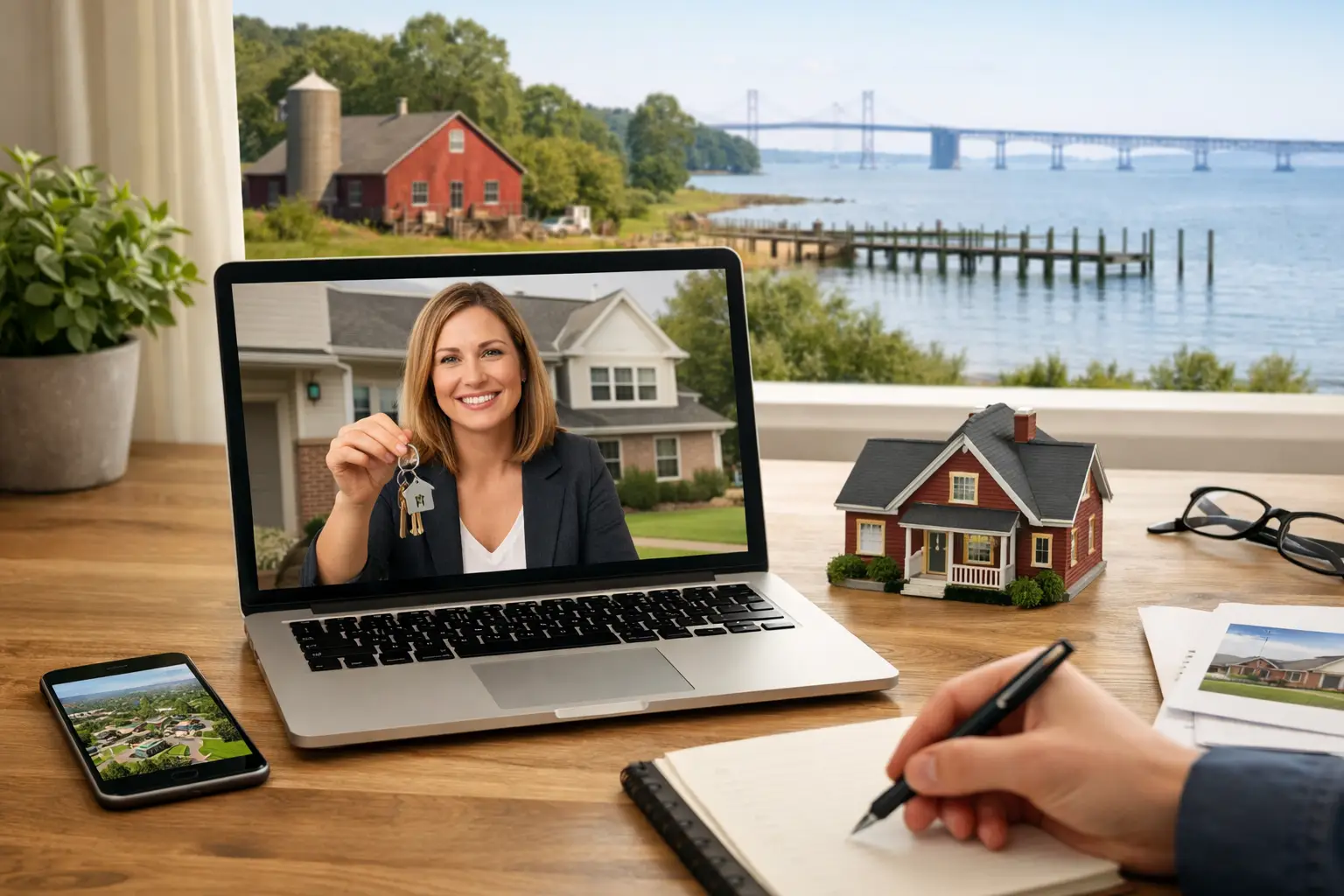
A job transfer, a military move, a new season of family life – sometimes the right Maryland home appears before you have time to make repeated trips. Remote home buying Maryland does not have to mean making a major decision with limited information. It does mean building a process that replaces casual weekend showings with clear communication, firsthand local insight, and careful due diligence.
Whether you are relocating to Anne Arundel County, considering a waterfront-adjacent community on the Eastern Shore, or narrowing your search in Queen Anne’s County, the goal is not simply to buy from afar. The goal is to know what you are buying, why it fits your life, and what needs attention before settlement.
Start With a Search That Reflects Real Life
Online listings are useful, but they cannot tell you how traffic moves around a neighborhood at 8:00 a.m., whether a street feels more active than the photos suggest, or how a home’s setting compares with others nearby. A remote search works best when your priorities are specific enough to guide decisions but flexible enough to account for the market.
Begin by separating your needs from your preferences. Bedrooms, commute requirements, budget, accessibility needs, and a desired move date are practical guardrails. A covered porch, a larger lot, or a particular architectural style may still matter, but knowing where you can compromise helps you act confidently when a strong property comes available.
It also helps to discuss the rhythm of your future location. Buyers moving from a more urban area may find that drive times, school districts, shopping access, and broadband availability vary considerably from one Maryland community to the next. For Eastern Shore buyers, proximity to water, flood considerations, septic systems, well water, and bridge travel can all affect daily life and long-term costs. In Anne Arundel County, neighborhood character may shift quickly between waterfront, suburban, and more commuter-focused areas.
A local agent should translate those differences into useful context, not simply send more listings. Toni McDowell Homes works with buyers to identify the features that will matter after the excitement of moving day has passed.
Build a Remote Home Buying Maryland Tour Plan
A video tour should be more than a walkthrough with a camera pointed at attractive rooms. It should answer the questions you would ask if you were standing in the home yourself.
Before each tour, provide a short list of concerns you want addressed. Perhaps you want to see storage, hear outside noise, check the condition of windows, or understand where the neighboring homes sit in relation to the backyard. Ask for footage of the street approach, driveway, garage, utility areas, and the view from key windows. A polished listing video often skips the practical details that influence everyday comfort.
During a live video showing, a buyer’s agent can open cabinets, test visible fixtures where appropriate, show room transitions, and point out features that photographs flatten or conceal. They can also offer grounded observations: the primary bedroom is spacious but faces the road; the basement has good ceiling height but limited natural light; the yard is private in summer but may look different when leaves are down.
Remote tours have limits. Video cannot fully convey odors, the feel of floor movement, humidity, traffic patterns over an entire day, or a neighborhood’s personality. That is not a reason to avoid buying remotely. It is a reason to identify those limits early and use inspections, local research, and honest conversation to close the information gap.
Consider One Focused Visit When Possible
If your timing and budget allow, a single well-planned visit can be valuable once you have narrowed the search to a few serious contenders. Instead of trying to see every available property, reserve that trip for homes that have already been screened through virtual tours, disclosures, pricing analysis, and conversations about your priorities.
But a visit is not always possible, especially for buyers managing a relocation deadline. In that case, the strength of your team and process matters even more. The right representation should make you feel informed, not pressured to rely on optimism.
Know the Numbers Before You Fall for a Home
Remote buyers need a complete monthly-cost picture, not just a purchase price. Maryland property taxes, homeowners association or condominium fees, insurance, loan terms, and estimated utility costs can change what feels comfortable. A home with an appealing list price may require a larger reserve if it has an aging roof, a private septic system, deferred maintenance, or substantial future improvements.
Your lender should provide a clear preapproval and be prepared to move at the pace of the local market. A preapproval also gives you a realistic framework for offers, appraisal gaps, closing costs, and cash reserves. In competitive situations, buyers sometimes focus only on the headline offer price. Terms can matter just as much to a seller, including financing strength, inspection structure, timing, and flexibility around possession.
That does not mean waiving protections simply to compete. Every offer should reflect the property’s condition, your risk tolerance, and the amount of information available. A strong offer is not necessarily the most aggressive one. It is the offer that gives the seller confidence while protecting your ability to make a sound purchase.
Treat Inspections as Your Eyes on the Ground
The home inspection period is especially important when you are not regularly visiting the property. Choose qualified inspectors, ask for thorough reports, and attend by video or phone if you cannot be there in person. A good inspector can explain what is routine maintenance, what deserves monitoring, and what may require immediate negotiation or further evaluation.
Depending on the home and location, additional inspections may be appropriate. Buyers may need to evaluate radon, water quality, septic systems, wells, wood-destroying insects, fireplaces, pools, or waterfront-related concerns. Older homes may also call for more attention to electrical systems, foundation conditions, drainage, and renovation history.
Not every inspection finding should become a negotiation point. No property is perfect, and a long report can feel alarming when read without context. Focus on safety, material defects, costly near-term repairs, and issues that affect the home’s intended use. Your agent can help organize the findings, communicate with the seller’s side, and keep the conversation focused on a fair solution.
Keep Communication Structured From Contract to Closing
Distance creates anxiety when updates arrive sporadically. A clear transaction plan helps prevent that. Once under contract, you should know the key dates for earnest money, inspection deadlines, financing milestones, appraisal, title work, final walkthrough, and settlement.
Responsive communication is more than sending reminders. It means explaining what each milestone means, identifying potential delays early, and coordinating the details that can otherwise become overwhelming from another state. If an inspection repair needs follow-up, if a contractor estimate is needed, or if the appraisal raises a question, remote buyers benefit from someone who takes ownership rather than leaving them to chase answers.
Digital signatures and remote document tools can make much of the process easier, but settlement requirements can vary based on the lender, title company, and transaction details. Discuss signing options early so you are not arranging travel or notarization at the last minute.
Do Not Skip the Final Walkthrough
The final walkthrough is your opportunity to confirm that the home’s condition is substantially as expected, agreed-upon repairs are complete, and included items remain in place. If you cannot attend, arrange for a trusted representative to walk through with you by live video whenever possible.
This is not a second inspection. It is a practical check before closing. Small issues are often easier to resolve before funds are transferred than afterward.
Make Space for the Emotional Side of a Long-Distance Move
Buying a home remotely is both a financial decision and a personal leap. You may be choosing a neighborhood before you have favorite coffee shops, familiar routes, or a local network. That uncertainty is normal.
The best way to reduce it is not through rushed reassurance. It is through a process built around your questions, honest local perspective, and decisions you can explain clearly to yourself. A home does not need to be flawless to be right, but you should understand its trade-offs before you commit.
When you are ready to begin, start with a conversation about where you are coming from, what you need next, and how much support will make the move feel manageable. A well-guided remote purchase can leave you arriving in Maryland with more than a set of keys – it can give you confidence that you chose well.